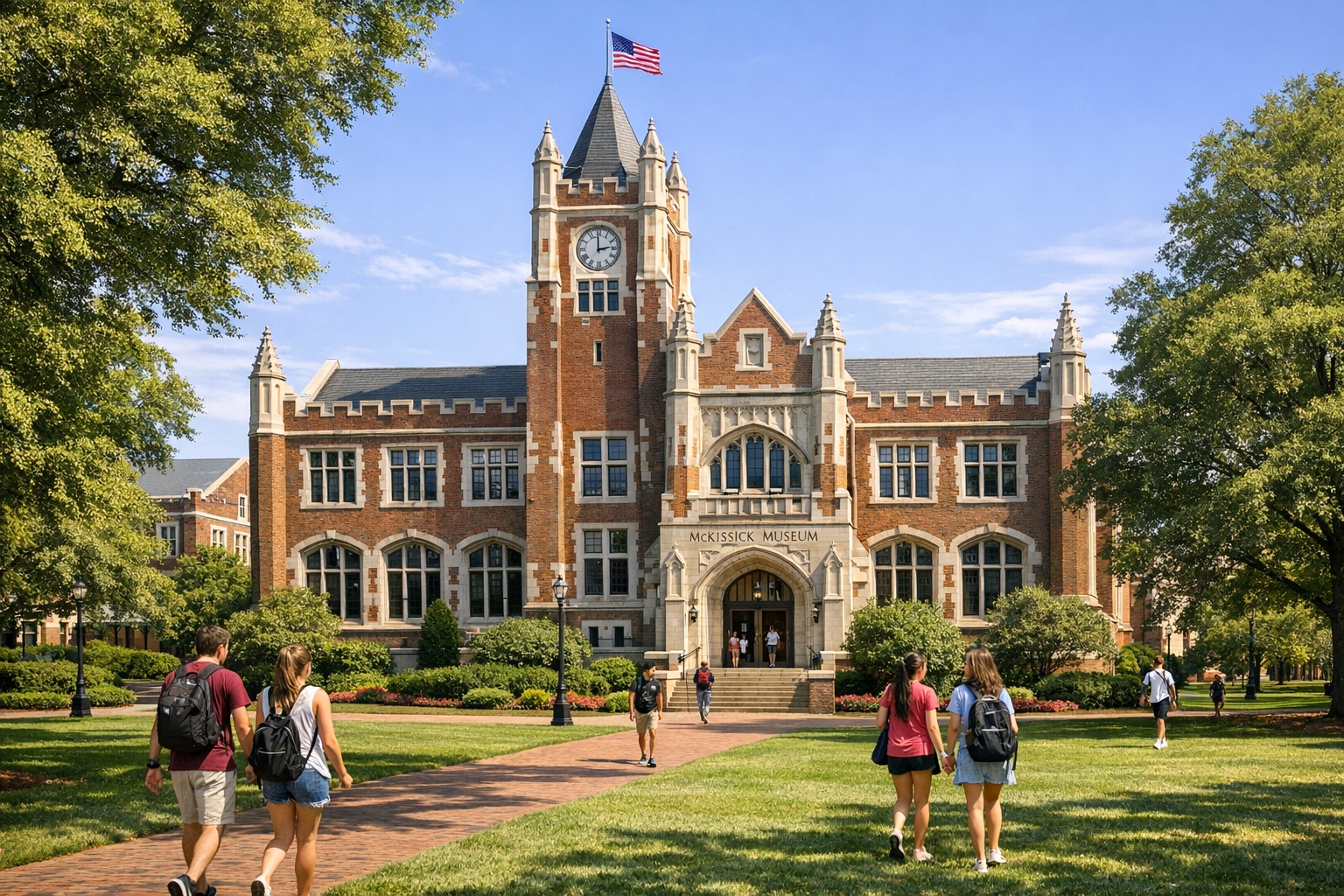
South Carolina's Higher Education Landscape: An Overview
South Carolina is home to a remarkably robust network of colleges and universities that collectively serve more than 260,000 students from across the United States and the world. The state's thirty-three accredited institutions span the full spectrum of American higher education — from flagship research universities and storied liberal arts colleges to cutting-edge technical schools and military academies with centuries-old traditions.
For prospective students, families making campus visits, and travelers simply curious about the intellectual heart of the Palmetto State, South Carolina's campuses offer some of the most compelling architectural and cultural experiences in the entire Southeast. The University of South Carolina's historic Horseshoe in Columbia, lined with antebellum buildings and ancient oaks, rivals any Ivy League quad for sheer beauty. Clemson University's campus in the northwest corner of the state unfolds across former Fort Hill plantation land with sweeping views of Lake Hartwell. The Citadel's whitewashed parade ground in Charleston carries the weight of more than 175 years of military tradition.
Beyond aesthetics, South Carolina's universities are genuine engines of economic growth and intellectual innovation. Research programs at UofSC and Clemson have attracted billions of dollars in federal and private funding, supported the state's booming automotive and aerospace manufacturing sectors, and produced graduates who lead companies, hospitals, law firms, and government agencies across the country. The state's commitment to higher education — evidenced by significant investment in scholarships through the LIFE, Palmetto Fellows, and SC HOPE scholarship programs — has increased enrollment, improved graduation rates, and built a stronger workforce pipeline than at any point in the state's history.
Whether you are planning a college visit tour, attending a football game, exploring a campus art museum, or simply passing through a university town for a meal and a walk, this guide provides everything you need to understand and appreciate the remarkable educational institutions that define South Carolina's academic identity.

Campus life in South Carolina — a blend of academic tradition and vibrant student energy
University of South Carolina, Columbia
The University of South Carolina — affectionately known to its 37,000+ students and legions of alumni as simply "Carolina" — is the state's largest and most comprehensive research university. Founded in 1801 as South Carolina College, it stands among the oldest public universities in the entire United States, predating many of the country's most celebrated academic institutions.
The Historic Horseshoe
No visit to the University of South Carolina is complete without a walk through the Horseshoe — the original campus core that has been listed on the National Register of Historic Places. Enclosed by a low brick wall and shaded by enormous live oaks, the Horseshoe is a crescent-shaped green space flanked by nine antebellum buildings that date back to the university's earliest decades. The elegant Rutledge College, built in 1805, is among the oldest surviving university buildings in the South. South Caroliniana Library, completed in 1840, was the first freestanding college library building erected in the United States — a distinction that speaks to the institution's longstanding commitment to scholarship and the preservation of knowledge.
During the Civil War, the Horseshoe buildings served as a hospital for Confederate and Union soldiers alike. The scars of that era are visible even today: iron rings embedded in the massive trees were used to tether horses, and several walls carry marks from wartime use. Walking the Horseshoe on a quiet autumn morning, surrounded by the rustle of falling leaves and the distant chime of the Thomas Cooper Library clock, is to stand at a crossroads of American history.
Academic Strengths and Rankings
UofSC is classified as a Carnegie R1 Doctoral University — the highest research activity classification — and is a member of the prestigious Association of American Universities, a consortium of sixty-eight leading research universities in the United States and Canada. Its Arnold School of Public Health consistently ranks among the top public health schools in the nation. The Moore School of Business is highly regarded for its international business program, which U.S. News & World Report has ranked #1 in the country for undergraduate international business multiple times. The College of Engineering and Computing has produced graduates who have gone on to careers at NASA, Boeing, IBM, and every major technology company.
The university's research expenditures exceed $320 million annually, supporting work in fields ranging from nano-manufacturing and polymer science to political polling and Gullah Geechee language preservation. The Darla Moore School of Business, housed in a stunning modern building adjacent to the historic campus, is a landmark in American business education that draws visiting executives, alumni, and recruiters from around the world.
Gamecock Nation: Sports Culture
South Carolina's athletic identity is inseparable from the Gamecocks. Williams-Brice Stadium, which seats over 80,000 passionate fans, transforms Columbia into the epicenter of the Southeastern Conference's college football universe on autumn Saturdays. The famous "2001" entrance — when the Gamecocks charge onto the field to the pounding bass of Richard Strauss's composition as 80,000 screaming fans hold up their lit smartphone screens — is widely considered one of the most electrifying moments in all of college sports. The women's basketball program, led in recent years to multiple national championships, has elevated the university's athletic profile to the very highest levels of American collegiate competition.
| Fact | Detail |
|---|
| Founded | 1801 (as South Carolina College) |
| Enrollment | 37,000+ undergraduate & graduate students |
| Location | Columbia, SC (state capital) |
| Carnegie Classification | R1 — Doctoral University: Very High Research Activity |
| Notable Alumni | Nikki Haley, Andrew Sorbo, David Wilkins |
| Colors | Garnet and Black |
| Mascot | Cocky the Gamecock |
Columbia itself — South Carolina's capital city — offers a rich urban ecosystem for students and visitors alike. The vibrant Five Points neighborhood adjacent to campus is packed with restaurants, coffee shops, music venues, and boutiques that have served generations of Gamecocks. The Vista arts and entertainment district, a short walk or ride downtown, hosts galleries, farm-to-table restaurants, craft breweries, and live music venues that make Columbia one of the most underrated small cities in the American South.
Clemson University
Perched in the foothills of the Blue Ridge Mountains in northwestern South Carolina, Clemson University occupies one of the most dramatically beautiful settings of any major university in the United States. The campus spreads across land that was once the Fort Hill plantation of John C. Calhoun — Vice President of the United States under two presidents — and later the home of Thomas Green Clemson, whose bequest to the state of South Carolina in 1888 established the university.

Tillman Hall — the heart of Clemson University's stunning Blue Ridge campus
Tillman Hall and the Campus Core
The first sight most visitors encounter at Clemson is Tillman Hall — its distinctive Romanesque Revival clock tower rising above the treetops, visible for miles across Lake Hartwell and the surrounding countryside. Built in 1894, Tillman Hall (originally called the Main Building) houses administrative offices and remains the defining architectural symbol of the university. Its sandy-pink brickwork, arched windows, and four-sided clock have appeared in countless photographs, postcards, and national rankings features — making it perhaps the most recognizable university building in all of South Carolina.
Strolling Clemson's central campus in autumn, when the dogwoods, maples, and oaks erupt into a spectacular palette of orange, crimson, and gold against the blue backdrop of the Appalachian foothills, is an experience that rivals any fall foliage display in New England. The university's commitment to maintaining its mature tree canopy — it has been designated a Tree Campus USA institution — makes the campus feel like a living arboretum as much as an academic precinct.
Academic Programs and Research Innovation
Clemson is South Carolina's land-grant university — a designation that traces back to the Morrill Act of 1862 and reflects the institution's original mission of providing practical education in agriculture and mechanical arts. That land-grant heritage continues to animate Clemson's research priorities today: the Clemson University International Center for Automotive Research (CU-ICAR) in Greenville is a globally recognized hub for automotive engineering and deep mobility research, attracting partnerships with BMW, Michelin, and dozens of other industry leaders.
The College of Engineering, Computing, and Applied Sciences consistently places among the top public engineering schools in the Southeast. Clemson's agriculture program — carried out across multiple research stations distributed throughout South Carolina's diverse ecological zones — conducts cutting-edge research in crop science, precision agriculture, food safety, and aquaculture. The College of Architecture, Arts and Humanities houses one of the most distinctive graduate architecture programs in the country, known particularly for its focus on community-engaged design and historic preservation.
In recent years, Clemson has been recognized as one of America's top-25 public universities by multiple major rankings, a rise that reflects decades of strategic investment in research infrastructure, faculty recruitment, and campus facilities. The library, the research park, and the stunning Clemson Sports Science Institute at Memorial Stadium have all contributed to this upward trajectory.
Tiger Athletics: More Than Just Football
Clemson football is a religion in the upstate of South Carolina. Memorial Stadium — known nationally as "Death Valley" — seats over 81,500 fans and has been the stage for some of the most memorable moments in college football history. The Tigers have won multiple national championships in the modern era, producing Heisman Trophy contenders, first-round NFL Draft picks, and a culture of athletic excellence that permeates every level of the program. Running down the Hill — the iconic pre-game tradition in which the Clemson team charges down a grassy slope into Memorial Stadium while Howard's Rock, carried from Death Valley California by coach Frank Howard, is touched by every player for good luck — is one of college football's most beloved rituals.
But Clemson's athletic excellence extends far beyond football. The soccer program regularly contends for national championships. The baseball team plays in Doug Kingsmore Stadium, which has been expanded and renovated into one of the finest facilities in college baseball. The women's volleyball, golf, and swimming programs have all produced All-Americans, and the university's commitment to the full Olympic sport portfolio makes Clemson a genuine multi-sport powerhouse.
| Fact | Detail |
|---|
| Founded | 1889 |
| Enrollment | 27,000+ students |
| Location | Clemson, SC (Oconee/Pickens counties) |
| Type | Public land-grant research university |
| Colors | Orange and Purple |
| Mascot | The Tiger |
| Notable Programs | Engineering, Business, Architecture, Agriculture |
The Citadel — The Military College of South Carolina
Few educational institutions in the United States carry the distinctive prestige — or inspire the fierce pride — of The Citadel. Established in 1842 in Charleston, The Citadel is one of six state-supported senior military colleges in the nation and maintains the unique distinction of being the only institution in the country where uniformed students, known as cadets, are in full charge of campus operations seven days a week, twelve months a year.

The Citadel's parade ground — a living theater of military tradition since 1842
The Corps of Cadets and Campus Life
Every civilian who visits The Citadel's campus on a Friday afternoon during the academic year is treated to one of Charleston's — and indeed South Carolina's — most spectacular sights: the Dress Parade. The entire 2,400-member Corps of Cadets assembles in their distinctive white shakos, grey trousers, and white crossbelts to march in precise formation across the enormous parade ground to the accompaniment of the Regimental Band and Pipes. It is a living tableau of military precision, institutional pride, and centuries-old tradition that draws hundreds of visitors every week and leaves even the most casual observer deeply moved.
Life inside the barracks — the four massive quadrangular residence halls that dominate the campus — is unlike anything at any other American university. Cadets rise before dawn, maintain immaculate rooms subject to inspection at any time, wear their uniform at virtually all times on campus, and operate under a strict honor code: A Citadel Cadet does not lie, cheat, steal, nor tolerate those who do. This demanding environment produces graduates — known as The Long Gray Line — who have gone on to distinguished careers in the military, business, law, medicine, and public service in numbers far disproportionate to the college's relatively small enrollment.
Academic Programs and Graduate School
While The Citadel is most famous for its undergraduate Corps of Cadets program, it also operates a substantial evening and graduate college for civilian students. Graduate programs in education, business administration, engineering, and psychology attract hundreds of working professionals from across the Charleston area each semester. The Citadel's School of Business has been AACSB accredited — the gold standard in business school accreditation — and its education programs prepare teachers and school administrators for careers across South Carolina and beyond.
The Citadel's location in Charleston places it in the middle of one of America's fastest-growing metropolitan economies, providing students with internship and employment opportunities in sectors ranging from defense contracting and cybersecurity to hospitality management and financial services. The relationship between The Citadel and the broader Charleston business community is deep and mutually beneficial — Citadel graduates are among the most sought-after entry-level hires in the region.
| Fact | Detail |
|---|
| Founded | 1842 |
| Enrollment | ~3,700 (2,400 cadets + graduate students) |
| Location | Charleston, SC |
| Type | State-supported senior military college |
| Notable Alumni | Pat Conroy (author), James Livingston (Medal of Honor) |
| Colors | Citadel Blue and White |
College of Charleston
The College of Charleston holds the remarkable distinction of being the oldest college in South Carolina and the thirteenth oldest in the United States. Founded in 1770 — six years before American independence — it is one of a handful of institutions that can legitimately claim to have been educating students in the same urban location for more than 250 years, making it a living part of Charleston's extraordinary historic fabric.
The campus occupies a prime position in Charleston's historic district, with its iconic Randolph Hall — a stately neoclassical building whose white columns and broad portico face onto St. Philip Street — serving as one of the most photographed buildings in the entire city. Walking through the wrought-iron gates onto the Cistern Yard, a shaded quadrangle of ancient live oaks and azaleas that bursts into spectacular bloom every spring, is to step into one of the most beautiful urban campus environments in America.
Academically, the College of Charleston has built particular strengths in environmental and marine sciences — reflecting its geographic position in the heart of the South Carolina Lowcountry — as well as historic preservation, computer science, and the performing arts. The Halsey Institute of Contemporary Art on campus hosts nationally significant exhibitions and has established Charleston as a serious destination on the American contemporary art circuit. The college's Study Abroad program, leveraging its location in a city that has historically served as one of America's gateways to the Atlantic world, sends hundreds of students to partner institutions across Europe, Latin America, and Asia each year.
"The College of Charleston offers its students something truly rare in American higher education: the opportunity to pursue rigorous academic work in the midst of one of the nation's most architecturally and historically significant cities."
For visitors to Charleston, the College of Charleston campus is an unmissable stop. Admission to the Cistern Yard is free, and guided tours are available by appointment. The college's location in the heart of the historic district means that a campus visit can seamlessly be combined with explorations of Rainbow Row, the Old Exchange Building, the City Market, and the dozens of outstanding restaurants and galleries that make Charleston one of the South's greatest cities.
Furman University, Wofford College & Other Notable SC Institutions
Beyond the flagship universities and The Citadel, South Carolina's higher education landscape is enriched by a collection of exceptional liberal arts colleges, historically Black colleges and universities (HBCUs), and specialized technical institutions that each contribute uniquely to the state's intellectual and cultural vitality.
Furman University, Greenville
Consistently ranked among the top liberal arts universities in the Southeast, Furman University in Greenville occupies a stunning 750-acre campus that features a central lake, Japanese Garden, and some of the finest academic facilities of any private university in the region. Founded in 1826 by South Carolina Baptists, Furman has evolved into a highly selective institution that draws students from across the country with its strong programs in business, neuroscience, political science, music, and sustainability science. The university's engagement with the rapidly growing Greenville metropolitan area — one of the most economically dynamic mid-sized cities in the American South — provides students with rich internship, research, and community engagement opportunities. Furman's golf course, designed by Tom Fazio, is considered among the most beautiful university golf facilities in the country.
Wofford College, Spartanburg
Founded in 1854 in Spartanburg, Wofford College is one of South Carolina's most distinguished small liberal arts colleges. Its majestic main building — an antebellum Italianate structure set atop a gentle hill at the top of a broad lawn — is a landmark of Upstate South Carolina architecture. Wofford has built a national reputation for the quality of its pre-professional programs (particularly pre-law and pre-medicine), its study abroad participation rates (among the highest of any American college its size), and the extraordinary loyalty of its alumni network. The college's close relationship with Spartanburg's vibrant arts community and its partnership with nearby Converse University have created a rich intellectual ecosystem in one of the Upstate's fastest-growing cities.
South Carolina State University, Orangeburg
Founded in 1896 as the state's land-grant institution for African Americans, South Carolina State University (SCSU) in Orangeburg holds a place of profound historical significance in the story of higher education in the American South. SCSU has produced generations of Black professionals, educators, military officers, and civic leaders who have shaped South Carolina and the nation. The university's I.P. Stanback Museum and Planetarium, one of the most important cultural institutions serving the Black community in the Southeast, houses rotating exhibitions of African American art and history. SCSU's ongoing mission — providing access to quality higher education for students from all backgrounds while preserving and celebrating the university's unique historical legacy — makes it an essential institution in any comprehensive understanding of South Carolina's academic landscape.
Presbyterian College, Clinton
Presbyterian College in Clinton — known to its students and alumni as simply "PC" — is a small, church-affiliated liberal arts college that has quietly maintained an exceptional record of graduate school placement and professional outcomes for more than a century. PC's pharmacy school, opened in 2010, quickly gained accreditation and has become one of the college's signature programs, drawing students from across the Carolinas and beyond. The intimate campus atmosphere and the college's strong emphasis on character development and community service have made PC a particularly attractive choice for students seeking a more personal educational experience than a large state university can provide.
Technical Colleges: The Workforce Development Backbone
South Carolina's sixteen technical colleges — coordinated under the State Board for Technical and Comprehensive Education (SC Technical College System) — constitute perhaps the most economically consequential sector of the state's higher education landscape. Institutions like Greenville Technical College (one of the largest community colleges in the Southeast), Trident Technical College in North Charleston, and Midlands Technical College in Columbia serve more than 80,000 students per year with programs in advanced manufacturing, information technology, healthcare, culinary arts, and dozens of other fields directly tied to the needs of South Carolina's economy. The SC Technical College System's AeroApply program, for example, has partnered with Boeing's North Charleston facility to create a direct pipeline from the classroom to well-paying jobs in aerospace manufacturing — a model of workforce alignment that has attracted national attention and praise from economic development professionals across the country.
🎓 South Carolina HOPE and Palmetto Fellows Scholarships
- Palmetto Fellows Scholarship: Up to $6,700/year for exceptionally meritorious SC students attending SC four-year institutions.
- LIFE Scholarship: Up to $5,000/year for SC students meeting GPA and SAT/ACT requirements.
- SC HOPE Scholarship: $2,800 for first-year students at four-year SC institutions who don't qualify for LIFE.
- Lottery Tuition Assistance: $1,000+/year for eligible SC students at two-year technical colleges.
Planning Your University Tour of South Carolina
For families and prospective students planning a campus visit circuit through South Carolina, the geography of the state allows for efficient multi-campus tours. The Greenville-Spartanburg corridor in the Upstate provides easy access to Furman, Wofford, and the Clemson campus (approximately 30 miles west). A day in Columbia allows visits to UofSC and the downtown arts district. Charleston offers The Citadel and the College of Charleston within easy walking distance of each other and mere steps from some of the most compelling historic architecture in America. Orangeburg and Clinton lie off the beaten tourist path but reward those who seek them out with a more intimate understanding of the remarkable diversity of South Carolina's educational heritage.
Every campus mentioned in this guide offers free self-guided walking tours year-round and scheduled guided tours during the academic year. Many host open house weekends in the autumn and spring that include academic presentations, student-led tours, financial aid workshops, and athletic events — all of which provide invaluable insight into the distinctive culture and atmosphere of each institution. For the traveler who wants to understand South Carolina at its deepest level, there is no better starting point than its universities.
Continue Exploring South Carolina
From campus greens to golden beaches — the Palmetto State has so much more to offer.